5 Math Games My Kids Actually Beg to Play (Yes, You Read That Right)
Last Friday, little Sofia ran up to me during dismissal and asked, "Ms. Santos, can we play Number War again on Monday?" I nearly dropped my coffee. In 22 years of teaching, I never thought I'd see the day when kids would literally beg for more math.
But here we are, and I'm not complaining.
Finding math games that actually engage our students (and don't make us want to pull our hair out) is like finding a unicorn sometimes. Trust me, I've tried plenty of duds over the years. Remember when I thought that complicated fraction board game would be amazing? Ay, dios mio. It took 20 minutes just to explain the rules, and half my class was already checked out.
After years of trial and error, I've found five games that work every single time. These aren't just activities that fill time. They're games my kids genuinely love, that reinforce real math skills, and that keep me sane during those last 15 minutes before dismissal.
1. Number War (Addition and Subtraction Edition)
This is Sofia's favorite, and honestly, it's become mine too.
You know the classic card game War? We've given it a math makeover. Each student gets half a deck of cards (remove face cards or assign them values). Instead of just comparing cards, players flip two cards and add them together. Highest sum wins all four cards.
For my struggling learners, we start with just one card each. For my advanced kids, I have them subtract the smaller number from the larger one, or even multiply.
The beauty of this game? It's self-differentiating. Marcus (not my son, my student Marcus) can practice basic addition facts while Isabella works on her multiplication tables, and they're both having a blast.
Pro tip: Laminate a hundreds chart for each table. Kids can use it to check their math without feeling embarrassed. Even my most confident mathematicians like having that safety net.
2. Around the World Multiplication
This classic gets kids moving, which is crucial when you're teaching in Florida and it's 95 degrees outside and everyone's energy is dragging.
Students stand behind chairs in a circle. I call out a multiplication fact, and the first person to answer correctly moves to the next chair. The goal is to make it "around the world" (back to your starting spot).
Here's my twist: instead of eliminating kids who get it wrong, they become "coaches" for the next round. This keeps everyone engaged and builds classroom community.
Last month, quiet little Emma made it three-quarters of the way around before missing 7x8. But you should have seen her face when she got to coach her classmates. Sometimes the real learning happens when we're teaching others.
Make it work for you: Start with addition facts if your kids aren't ready for multiplication. Or use it for any math skill that needs quick recall.
3. Math Scavenger Hunt
This one gets us out of our seats and thinking creatively about math in the real world.
I create a list of math problems, but instead of just solving them on paper, kids have to find the answers around our classroom. "Find something that shows the fraction 3/4." "Count objects that come in groups of 5." "Measure something that's about 12 inches long."
The kids work in pairs, and they have to justify their answers to me before moving to the next clue. It's amazing how engaged they get when math becomes a treasure hunt.
Florida teacher hack: Do this during indoor recess when it's storming outside. It burns energy and keeps learning going when we're all getting a little stir-crazy.
4. Silent Ball with Math Facts
You know Silent Ball, right? Kids stand on their desks and toss a soft ball around. If you drop it, talk, or make a bad throw, you sit down.
My version adds math. Before throwing the ball, you have to solve the problem I call out. Get it wrong? You're sitting down, mija.
This game is pure magic for practicing math facts. The physical component keeps everyone alert, and the "silent" rule means no one's shouting out answers and making others feel bad.
I've watched kids who normally shut down during math drills stay engaged for 20 minutes straight with this game. There's something about standing on desks that makes even the most reluctant learner want to participate.
Safety note: Clear rules about gentle tosses only, and maybe skip this one if your principal is doing walk-throughs. Just saying.
5. Race to 100 (or 1000)
This is perfect for those last few minutes of class when attention spans are shot but you want to squeeze in more learning.
Each team gets a recording sheet. I roll two dice, and teams can either add, subtract, or multiply those numbers (depending on what we're working on). They record their equation and running total.
First team to reach exactly 100 wins. But here's the catch: if you go over, you have to subtract on your next turn to get back down.
The strategy element hooks my competitive kids, while the repetitive practice helps everyone build fluency. Plus, it's loud enough to be exciting but structured enough that I don't lose control of my classroom.
Differentiation idea: Give different teams different target numbers. My advanced group might race to 1000 while others aim for 50.
Making Games Work in Your Classroom
Here's what I've learned about implementing math games successfully: start small and build your routines.
Don't try to introduce all five games in one week. Pick one, teach the rules explicitly, and play it until kids know exactly what's expected. Then add the next one.
Also, have a backup plan. Sometimes a game that worked perfectly with last year's class falls flat with this year's group. That's okay. We adapt, we adjust, and we try something new.
The Real Magic
The best part about these games isn't just that kids love them (though that's pretty wonderful). It's that they're practicing math skills without realizing it. They're building fluency, developing number sense, and gaining confidence.
When Carlos asks me why I'm cutting up index cards for math games at 9 PM, I tell him it's because I saw David, who usually hates math, teaching another student the strategy for Number War during lunch. That's worth a few late nights.
These games have transformed my math block from something we endure to something we actually enjoy. And in a world where our kids face so many challenges outside our classroom walls, giving them 20 minutes of pure mathematical joy feels pretty important.
Try one of these games this week. Start with whichever one feels most manageable for your classroom. I promise you, within a few days, you'll have kids asking when they get to play again.
And when that happens, you'll know you've found something special.
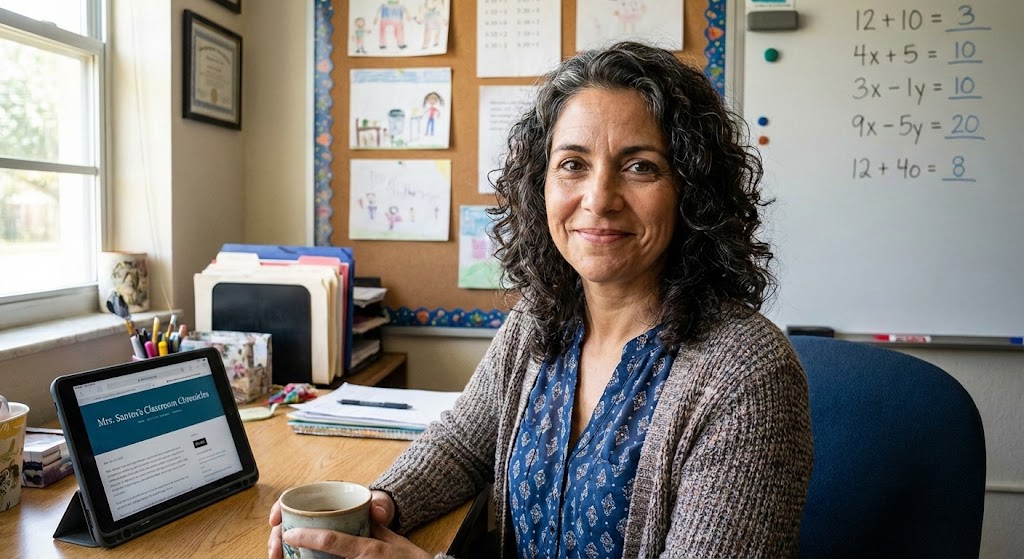
Maria Santos
Maria has been teaching 4th grade in Tampa, Florida for 22 years. Known as "the math whisperer" among her colleagues, she writes about the real challenges and victories of teaching in Florida's public schools.
When she's not grading papers or creating lesson plans, you can find Maria at her local teacher supply store (with coupons in hand) or sharing teaching tips over cafecito with her teacher friends.
View Full Profile →Related Articles
When Mid-Year Data Makes You Want to Hide Under Your Desk (But You Don't Have To)
Math teaching strategy: Last Tuesday, I got my mid-year FAST data back and my first thought was, "Ay...
Making Mid-Year Data Work for You (Instead of Against You)
Math teaching strategy: Last Tuesday, I walked into the copy room and found Jessica practically hype...
Ready to Improve Your FAST Scores?
Upload your class data and get personalized IXL success plans in seconds.
Try It Free