B.E.S.T. Standards: What Actually Changed (And What Didn't)
Last Tuesday, I was explaining fractions to my class when little Sofia raised her hand and asked, "Mrs. Santos, why do we have to learn it this way now when my sister learned it different?"
Ay, mija, I thought. Welcome to my world.
Here we are again, folks. Another acronym, another set of standards, another round of "everything is different now" panic in the teacher's lounge. But after surviving 22 years of educational pendulum swings, I'm here to tell you something: B.E.S.T. isn't the complete overhaul everyone's making it out to be.
Don't get me wrong. There are real changes. But there's also a lot of repackaging of things we've been doing all along.
The Big Picture: What B.E.S.T. Actually Means
B.E.S.T. stands for Benchmarks for Excellent Student Thinking, in case you've been too busy actually teaching to memorize another acronym. It replaced the Florida Standards (which were basically Common Core with a Florida twist) starting in the 2022-23 school year.
The state promised us clearer expectations, better alignment with what Florida students need, and standards that would be easier to understand. Some of that is true. Some of it... well, pero, let's just say I've heard these promises before.
What Really Changed in Elementary Math
Here's where I can speak from the trenches. The math changes are the most noticeable, especially in how we teach operations.
The Algorithm is Back, Baby
Remember when we had to teach seventeen different ways to subtract and couldn't just show kids the traditional algorithm until they'd mastered number lines and decomposition? Those days are over.
B.E.S.T. explicitly requires teaching the standard algorithms for addition and subtraction by second grade, and multiplication and division by fourth grade. I actually cheered when I read this. Not because conceptual understanding isn't important, but because we can finally give kids the tools they need without feeling like curriculum criminals.
Fractions Got Real
The fraction progression makes more sense now. We start with unit fractions in third grade and build systematically. No more jumping around or expecting kids to understand equivalent fractions before they really get what a fraction represents.
Last year, I had Marcus (not my son, different Marcus) who was completely lost with fractions under the old standards. This year, with the clearer progression, he's actually getting it. Sometimes simpler really is better.
Reading: Less Drama Than Expected
Everyone was bracing for major changes in ELA, but honestly? If you were already doing balanced literacy with phonics, you're fine.
Phonics is Explicit
The standards now explicitly require systematic phonics instruction. This shouldn't surprise anyone who's been paying attention to the science of reading movement. We're talking about what good teachers have been doing forever.
Writing Got Streamlined
The writing standards are cleaner. Less overlap, clearer expectations. I'm not spending as much time trying to figure out if an assignment hits standard W.4.2.b or W.4.2.c. It just needs to be good informational writing.
What Didn't Change (Thank Goodness)
Here's what's funny. All the panic about B.E.S.T. made it sound like we'd have to throw out everything and start over. But most of what we do every day? Still the same.
Good Teaching is Still Good Teaching
Kids still need to think critically. They still need to solve problems. They still need to read, write, and communicate. The standards might be worded differently, but the heart of what we do hasn't changed.
Differentiation Still Matters
The standards don't tell us to teach every kid the same way. They tell us what every kid should learn. How we get them there? That's still our professional judgment.
The Reality Check: Implementation Challenges
Let me be honest about what's been tough.
Professional Development Overload
We've been in training mode for two years now. Every district meeting, every PLC, every spare moment has been about B.E.S.T. I get it, we need to understand the changes. But sometimes I feel like I'm spending more time learning about teaching than actually teaching.
Resource Scramble
Publishers are still catching up. Some of our materials align perfectly, others need major tweaking. I've been creating more of my own stuff than I have in years. Carlos keeps asking why I'm at the computer every night. "They changed the standards again," I tell him. He just shakes his head.
Assessment Anxiety
The FAST test is supposed to align better with B.E.S.T., but we're all still figuring out what that means. My kids did fine on the spring FAST, but I won't pretend I'm not nervous about how the scores will look district-wide.
Making B.E.S.T. Work in Your Classroom
Here's what I've learned about making this transition smoother:
Focus on the Big Shifts
Don't try to memorize every tiny change. Focus on the major shifts in your grade level. For me in fourth grade, that means the explicit algorithm instruction and the cleaner fraction progression.
Use What You Have
Most of your good activities still work. I'm still using the same hands-on fraction activities I've used for years. They just fit better now with the clearer standards.
Collaborate More Than Ever
This is not the time to close your door and figure it out alone. My team meets every Friday to share what's working and what isn't. Yolanda down the hall has been a lifesaver with her organization systems.
The Student Perspective
You know what's interesting? My kids haven't noticed most of the changes. They're still learning, still growing, still having those lightbulb moments that make this job worth it.
Yesterday, Emma finally understood long division using the standard algorithm. Would she have gotten there with the old standards? Probably. But there's something to be said for having a clear, systematic approach.
Looking Forward
We're in year two of B.E.S.T. implementation, and honestly, it's starting to feel normal. The panic has died down, the resources are getting better, and we're finding our rhythm.
Is it perfect? Of course not. Will there be another set of standards in five to ten years? Probably. But that's okay. We've weathered these storms before, and we'll weather them again.
The kids are still kids. Math is still math. Reading is still reading. And good teachers are still finding ways to reach every student, no matter what the standards are called.
So take a deep breath, fellow Florida teachers. We've got this. We always do.
What changes have you noticed in your classroom with B.E.S.T.? I'd love to hear what's working for you and what's still a struggle. We're all in this together.
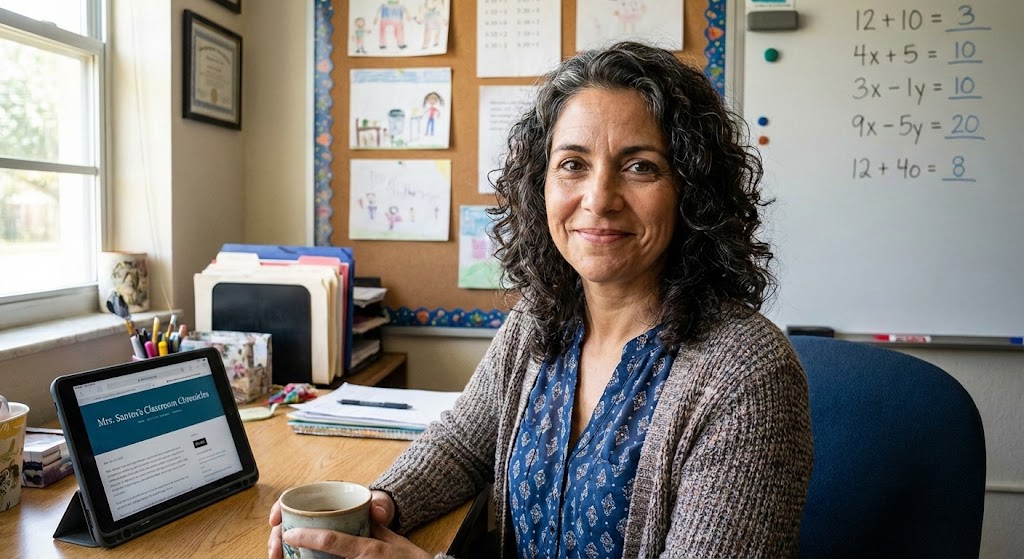
Maria Santos
Maria has been teaching 4th grade in Tampa, Florida for 22 years. Known as "the math whisperer" among her colleagues, she writes about the real challenges and victories of teaching in Florida's public schools.
When she's not grading papers or creating lesson plans, you can find Maria at her local teacher supply store (with coupons in hand) or sharing teaching tips over cafecito with her teacher friends.
View Full Profile →Related Articles
What I Wish I Knew About FAST Testing (Before I Learned the Hard Way)
Florida teacher tip: Let me paint you a picture. It's March 2019, my first year with FAST testing, a...
When Your Classroom Feels Like the Surface of Venus: Surviving Florida's Heat Without Losing Your Mind
Florida teacher tip: It was 8:47 AM on a Tuesday in September when I realized my classroom thermomet...
Ready to Improve Your FAST Scores?
Upload your class data and get personalized IXL success plans in seconds.
Try It Free