Dear First-Year Florida Teacher: You're Going to Make It (I Promise)
I still remember my first day teaching in Florida like it was yesterday. August 2002, standing in front of 28 third-graders in a classroom that felt like a sauna because the AC had broken over the weekend. I was 25, fresh out of my education program, and absolutely terrified.
By October, I was crying in my car after school most days. By December, I was googling "career change options for teachers." But here I am, 22 years later, still in love with this crazy profession we've chosen.
If you're reading this as a first-year teacher in Florida, or maybe you're thinking about it, I want you to know something: you're going to make it. But let me share some truths I wish someone had told me back then.
The Florida Reality Check
Teaching in Florida isn't like teaching anywhere else. We have our own special brand of challenges that they don't really prepare you for in college.
First, the heat. Ay, dios mío, the heat. Your classroom might be an icebox in the morning and a furnace by lunch. Keep a cardigan and a fan at your desk. Trust me on this one.
Second, hurricane season is real, and it will mess with your lesson plans. I learned to keep digital copies of everything after Hurricane Charley took out our power for a week. Have backup plans for your backup plans.
Third, Florida students are different. We have kids from everywhere - Cuba, Haiti, Venezuela, Georgia, New York. Some have been through trauma that would break your heart. Others come from families who moved here for a fresh start. All of them deserve your patience and understanding.
The Testing Monster
Let's talk about testing because nobody prepared me for how much it would dominate our lives. When I started, it was FCAT. Then came NCLB and more testing. Now we have FAST and B.E.S.T. standards.
Here's what I learned the hard way: don't let testing anxiety become your anxiety. Yes, the scores matter. Yes, there's pressure. But your students are not data points, and you are not defined by their test scores.
I spent my first three years making myself sick over testing. I was so focused on preparing kids for the test that I forgot to actually teach them. My principal at the time, Mrs. Rodriguez, pulled me aside and said something I'll never forget: "Maria, if you teach them well, they'll test well. But if you only teach them to test, they'll never really learn."
Classroom Management: The Make-or-Break Skill
Nobody told me that classroom management would be 80% of my job that first year. I thought if I planned amazing lessons, the kids would just naturally behave. Pero, I was so wrong.
My first month was chaos. Kids talking over me, getting up without permission, not following directions. I went home exhausted every single day.
Here's what saved me: routines, routines, routines. And I mean everything. How to sharpen pencils. How to ask for help. How to line up for lunch. What to do when you finish your work early.
I spent an entire weekend that October writing out every single routine I could think of. Then I taught them like they were academic subjects. We practiced lining up for two weeks straight until it was automatic.
The other thing that saved me was building relationships. I started greeting every kid at the door. I learned their names by the second day (flashcards at home, don't judge). I asked about their weekends and remembered what they told me.
When little Jayden started acting out in November, instead of sending him to the office, I asked what was wrong. Turns out his parents were getting divorced, and he was scared. We worked out a signal he could give me when he was feeling overwhelmed. That conversation changed everything for both of us.
The Parent Communication Learning Curve
My first parent-teacher conference was a disaster. I was so nervous that I just rattled off test scores and grades. The mom looked at me and said, "But how is she doing? Is she happy? Does she have friends?"
I realized I had been so focused on academics that I wasn't seeing the whole child. Now I always start parent conversations with something positive and personal. "Sofia is such a helper in our classroom. She always makes sure new students feel welcome."
Also, learn to communicate in multiple ways. Some parents prefer emails, others want phone calls, and some only respond to notes sent home. Meet them where they are.
Finding Your Teacher Tribe
This might be the most important advice I can give you: find your people. Teaching can be isolating, especially that first year when you feel like everyone else has it figured out (spoiler alert: we don't).
I was lucky to have Yolanda next door my first year. She took me under her wing, shared her resources, and talked me off the ledge more times than I can count. She's still one of my closest friends today.
Don't be afraid to ask for help. That teacher who always seems to have perfect bulletin boards? She's probably been doing this for 15 years. The one whose class walks silently in the hallway? Ask her for tips. Most teachers love sharing what works.
Join your grade-level team meetings, even if they're not required. Eat lunch with colleagues instead of hiding in your room. Go to the happy hours and school events. These people will become your support system.
The Emotional Roller Coaster
Let me be honest with you about something nobody talks about: you're going to have bad days. Really bad days. Days when you question everything and wonder if you made a huge mistake.
I had one day in February of my first year where nothing went right. The copier broke, a parent yelled at me, and I completely botched a math lesson. I sat in my car after school and called my mom crying.
She said something that stuck with me: "Mija, if it was easy, everyone would do it. But you're exactly where you're supposed to be."
The hard days don't mean you're failing. They mean you care. And caring teachers, even imperfect ones, are exactly what our Florida kids need.
Practical Survival Tips
Here are some concrete things that will make your life easier:
Keep a change of clothes at school. Trust me on this one.
Make friends with the custodian, the secretary, and the cafeteria manager. They run the school, and they can save your day.
Set up systems for everything: grading, parent communication, lesson planning. Don't try to wing it.
Take care of yourself. Eat lunch. Drink water. Leave school at a reasonable time most days.
Remember why you started. Keep a folder of sweet notes from kids and positive emails from parents. Read them on the tough days.
You've Got This
I know it feels overwhelming right now. I know you're probably second-guessing yourself daily. But here's what I see that you might not: you chose this profession because you want to make a difference in kids' lives. That heart you have? That's the most important thing you bring to the classroom.
Florida needs good teachers. Our kids need teachers who see their potential, who believe in them, who show up every day ready to help them grow. You are going to be that teacher for someone.
Your first year won't be perfect. Mine sure wasn't. But it will be the foundation for an incredible career if you let it be.
Welcome to the Florida teaching family. We're so glad you're here.
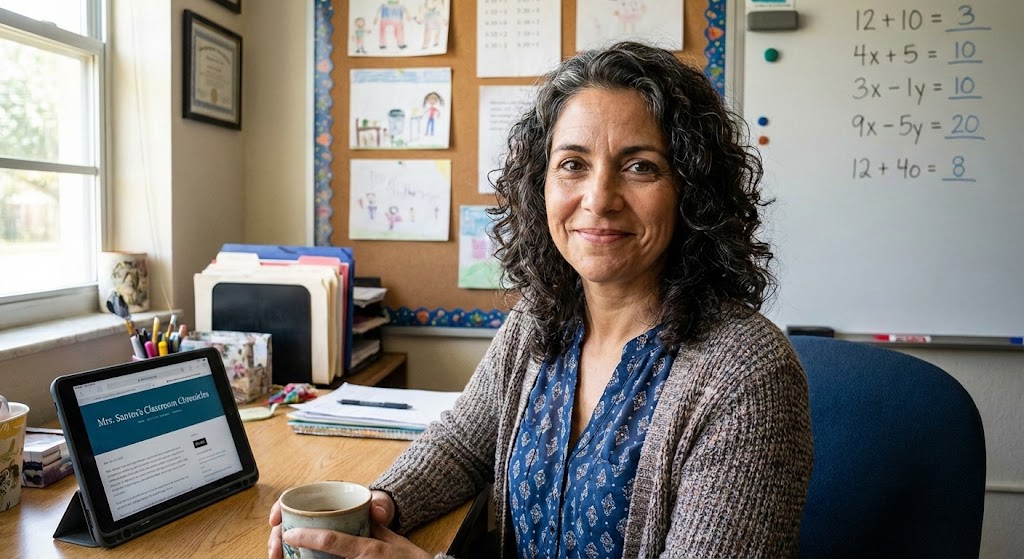
Maria Santos
Maria has been teaching 4th grade in Tampa, Florida for 22 years. Known as "the math whisperer" among her colleagues, she writes about the real challenges and victories of teaching in Florida's public schools.
When she's not grading papers or creating lesson plans, you can find Maria at her local teacher supply store (with coupons in hand) or sharing teaching tips over cafecito with her teacher friends.
View Full Profile →Related Articles
What I Wish I Knew About FAST Testing (Before I Learned the Hard Way)
Florida teacher tip: Let me paint you a picture. It's March 2019, my first year with FAST testing, a...
When Your Classroom Feels Like the Surface of Venus: Surviving Florida's Heat Without Losing Your Mind
Florida teacher tip: It was 8:47 AM on a Tuesday in September when I realized my classroom thermomet...
Ready to Improve Your FAST Scores?
Upload your class data and get personalized IXL success plans in seconds.
Try It Free