Dear New Florida Teacher: What I Wish Someone Had Told Me 22 Years Ago
I still remember my first August in a Florida classroom. Fresh out of college, armed with laminated bulletin board borders and enough optimism to power the entire school. By October, I was crying in my car during lunch break, wondering if I'd made a terrible mistake.
If that sounds familiar, mija, you're not alone.
After 22 years in Florida classrooms, I've seen hundreds of new teachers come through our doors. Some flourish immediately, others struggle but find their footing, and yes, some decide teaching isn't for them. But here's what I've learned: the ones who make it aren't necessarily the most naturally gifted. They're the ones who learn to navigate the unique challenges of teaching in the Sunshine State.
So grab your cafecito and let me share what I wish someone had told me back in 2002.
The Weather Will Humble You
Let's start with the obvious: Florida weather is no joke, and it affects everything about your classroom.
Your beautiful bulletin boards? They're going to wilt in the humidity if you don't laminate everything. And I mean everything. That cute tissue paper flower display you saw on Pinterest? It'll look like sad, droopy lettuce by September.
August and September are brutal. Your kids will be sluggish, cranky, and sweaty even with the AC running. I learned to keep my most engaging, high-energy lessons for these months because fighting the heat requires extra creativity.
Hurricane season isn't just something you see on the news anymore. You'll find yourself checking weather apps obsessively and having real conversations about evacuation plans. Keep a "hurricane bag" ready with essential teaching materials, because you never know when you'll need to relocate or extend a break.
And please, invest in a good umbrella and keep flip flops in your car. Florida rain doesn't mess around, and neither should you.
The Testing Culture Is Real (But You Can Work With It)
I've survived FCAT, NCLB, Common Core, and now B.E.S.T. standards. Each time, veteran teachers told me the sky was falling. Each time, we adapted.
Yes, Florida takes testing seriously. FAST scores matter, data talks are frequent, and you'll hear acronyms that sound like alphabet soup. But here's the thing: good teaching is still good teaching, regardless of what they call the standards this year.
Focus on building relationships with your kids first. A child who trusts you will work harder for you, test or no test. I learned this the hard way when I spent my first year drilling test prep instead of getting to know my students. My scores were mediocre, and my kids were miserable.
Create a data binder, but don't let it become your bible. Use it to inform your instruction, not drive your anxiety. And remember, you're teaching children, not data points.
Your Students Will Surprise You Every Single Day
Florida classrooms are beautifully diverse, and if you're at a Title I school like me, you'll quickly learn that your kids face challenges you might never have imagined.
I've had students who were homeless, students raising their younger siblings, students who spoke three languages but were labeled "behind" because English wasn't their first. I've had kids who came to school hungry and kids who stayed late because school felt safer than home.
Don't make assumptions. That quiet kid in the corner might be processing trauma, or they might just be shy. The "troublemaker" might be acting out because they're bored, frustrated, or dealing with something heavy at home.
Build relationships first, teach second. Learn their names quickly (and how to pronounce them correctly). Ask about their families, their interests, their dreams. Keep granola bars in your desk and band-aids in your pocket. Sometimes being a teacher means being a safe adult first and an educator second.
The Parent Communication Game Is Different Here
Florida parents are passionate about their kids' education, which is wonderful and sometimes overwhelming.
Some parents will email you daily. Others you'll never hear from despite multiple attempts to connect. Some will question every grade, others will apologize for their child's existence. It's a wide spectrum, and learning to navigate it takes time.
Over-communicate at the beginning. Send home a detailed classroom newsletter, post regularly on your classroom page, and make positive phone calls early in the year. When problems arise later, you'll already have established yourself as someone who cares about their child.
Learn basic Spanish phrases if you don't already know them. Even a simple "Hola, soy la maestra de..." goes a long way with families. And don't be afraid to use translation apps or ask bilingual colleagues for help.
Your Colleagues Are Your Lifeline
The teacher next door isn't your competition, she's your survival partner.
Find your people early. Join the grade level group chat (yes, there will be one). Attend the optional meetings when you can. Eat lunch in the teacher's lounge instead of hiding in your classroom.
Ask questions. Lots of them. Where do I find construction paper? How does bus duty work? What's the real story behind that policy? Veteran teachers have institutional knowledge that can save you months of trial and error.
Offer to help, even when you feel like you're drowning. Staying late to help with the book fair or volunteering for the school carnival shows you're invested in the school community, not just your own classroom.
The Learning Curve Is Steep, But You'll Climb It
My first year, I felt like I was failing daily. Lesson plans took forever, I couldn't find anything in my messy classroom, and I went home exhausted every single day.
By December, I started to find my rhythm. By spring, I actually felt like a teacher instead of someone pretending to be one.
Give yourself grace. You're not supposed to have it all figured out in your first year, or even your second. Every veteran teacher you admire was once exactly where you are now, feeling overwhelmed and wondering if they were cut out for this.
You're Going to Make It
Here's what I know for sure: if you care enough about your students to worry about doing right by them, you're already on the right track.
There will be hard days. Days when the copier breaks, the AC goes out, and three kids have meltdowns before lunch. Days when you question everything and wonder if you should have gone into accounting like your cousin suggested.
But there will also be magical days. Days when a struggling reader finally gets it, when your class nails that difficult concept, when a former student comes back to visit and tells you how much your class meant to them.
Those magical days make all the hard ones worth it.
Welcome to Florida teaching, mija. We're glad you're here, and we're rooting for you. You've got this, even when it doesn't feel like it.
Now go drink some water, laminate something, and remember: we're all in this together.
What would you add to this list? Drop a comment below and share your first-year survival tips with our newest Florida teachers.
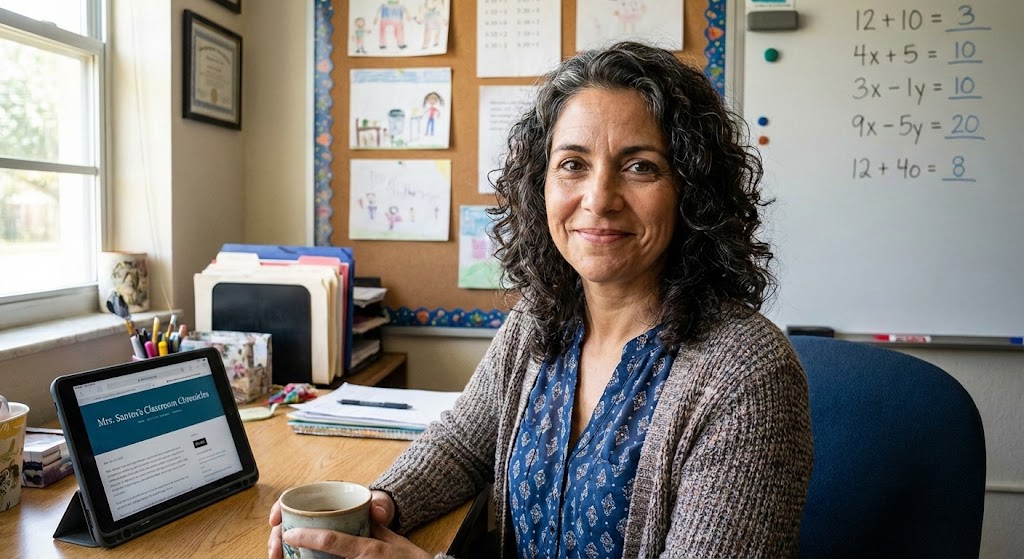
Maria Santos
Maria has been teaching 4th grade in Tampa, Florida for 22 years. Known as "the math whisperer" among her colleagues, she writes about the real challenges and victories of teaching in Florida's public schools.
When she's not grading papers or creating lesson plans, you can find Maria at her local teacher supply store (with coupons in hand) or sharing teaching tips over cafecito with her teacher friends.
View Full Profile →Related Articles
What I Wish I Knew About FAST Testing (Before I Learned the Hard Way)
Florida teacher tip: Let me paint you a picture. It's March 2019, my first year with FAST testing, a...
When Your Classroom Feels Like the Surface of Venus: Surviving Florida's Heat Without Losing Your Mind
Florida teacher tip: It was 8:47 AM on a Tuesday in September when I realized my classroom thermomet...
Ready to Improve Your FAST Scores?
Upload your class data and get personalized IXL success plans in seconds.
Try It Free