Hurricane Days: How to Prep Your Classroom (And Your Sanity) for Storm Season
Last Tuesday, I was in the middle of explaining long division when my principal's voice crackled over the intercom: "Teachers, please check your email regarding potential school closures due to Hurricane..."
And just like that, twenty-eight fourth graders started buzzing with excitement while I felt that familiar pit in my stomach. Hurricane season in Florida means one thing for us teachers: controlled chaos wrapped in emergency planning with a side of "please don't let us lose power for a week."
After 22 years of teaching through countless storms, I've learned that hurricane preparedness isn't just about boarding up windows. It's about protecting our classroom communities and keeping learning alive, even when Mother Nature has other plans.
Before the Storm: Your Hurricane Prep Checklist
Secure Your Physical Classroom
First things first, mija. Walk through your classroom like you're expecting a toddler tornado (which isn't far from hurricane energy, honestly).
Take down anything hanging from your ceiling. Those cute bulletin board borders you spent Sunday afternoon putting up? They need to come down. I learned this the hard way during Hurricane Irma when I came back to find my entire "Math Stars" display scattered across the floor like confetti.
Pack up your personal items and anything irreplaceable. That coffee mug your first class gave you? The handwritten thank you notes from parents? Take them home. Trust me on this one.
Create Your Digital Emergency Kit
Here's where we get smart about continuity. Scan or photograph important documents: your lesson plans, student rosters, emergency contact lists, and any assessment data you can't afford to lose.
I keep a "Hurricane Folder" on Google Drive that I update at the beginning of each storm season. It includes: - Two weeks worth of review activities that don't require special materials - Links to educational videos and virtual field trips - A list of free educational websites that work on phones - Templates for simple learning activities parents can do at home
Prep Your Students (Without Scaring Them)
Kids pick up on our anxiety faster than we think. When little Sofia asked me if the hurricane was going to "blow our school away," I realized I needed to address their concerns head-on.
We spend time talking about hurricane safety in age-appropriate ways. I explain that sometimes schools close to keep everyone safe, just like how we have fire drills to practice being safe.
For my students who might not have reliable internet or devices at home, I prepare paper packets with review work. Nothing too challenging, just familiar activities that reinforce what we've been learning.
During the Storm: Staying Connected
Keep Communication Simple
If you're lucky enough to have power and internet, resist the urge to assign complex projects. Families are dealing with enough stress without trying to figure out how to submit a PowerPoint presentation during a power outage.
I send one simple message per day through our class app: "Hope everyone is staying safe! Today's optional activity: practice your multiplication facts or read for 20 minutes. No need to report back."
Remember Your Families
Some of our students live in mobile homes or older buildings. Some parents can't afford to evacuate or stock up on supplies. The storm affects every family differently.
Check in without being overwhelming. A simple "Thinking of you all" message can mean more than you know.
After the Storm: The Real Work Begins
Assess Before You Stress
When we finally return to school, the first thing I do is take the temperature of my classroom community. Forget the lesson plans for a hot minute.
Some kids will be excited to share their "adventure." Others might have lost their homes or spent scary nights in shelters. I always plan for the first day back to be mostly about reconnecting and processing.
Rebuild Your Routine Gradually
That perfectly planned unit on fractions? It can wait another day or two. Kids need routine and normalcy, but they also need grace.
I start with familiar activities and comfort routines. We might spend extra time on morning meeting or do more hands-on activities than usual. The academic catch-up happens naturally once everyone feels settled.
Address the Learning Gaps
Here's the reality nobody talks about: hurricane days create learning gaps, especially for our most vulnerable students. While some kids spent storm days reading and practicing math with engaged parents, others spent them worried about safety or dealing with family stress.
Don't panic about "lost instructional time." Instead, focus on spiraling review into your regular lessons. That fraction unit? Add some quick multiplication review at the beginning. Reading comprehension? Choose passages that review science concepts you covered before the storm.
The Silver Lining
You know what I've noticed over the years? Hurricane days often bring out the best in our school communities. Teachers share resources freely. Parents who never volunteered before show up to help with cleanup. Students appreciate school in a whole new way.
Last year, after Hurricane Ian, my student Marcus told me he missed our classroom during the evacuation. "I kept thinking about our reading corner," he said. It reminded me that we're not just teaching subjects. We're creating safe havens.
Your Hurricane Survival Kit for Sanity
Don't forget to take care of yourself, porque you can't pour from an empty cup. Stock up on your favorite coffee or tea. Download some mindless entertainment for when the power goes out. Have a plan for your own family.
And remember, it's okay if your post-hurricane lessons aren't Pinterest-perfect. Your students need you to be present and calm more than they need you to be superhuman.
We've weathered storms before, and we'll weather them again. That's what we do in Florida. We bend, but we don't break. And when the sun comes out again, we're still here, still teaching, still making a difference.
Stay safe out there, fellow educators. We've got this.
What are your best hurricane prep tips? Drop them in the comments. We're all in this together.
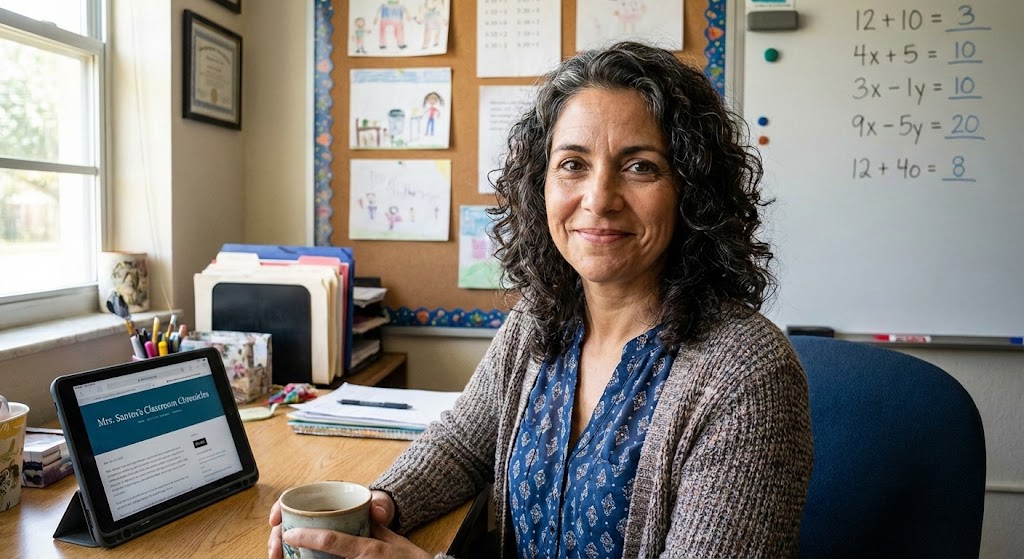
Maria Santos
Maria has been teaching 4th grade in Tampa, Florida for 22 years. Known as "the math whisperer" among her colleagues, she writes about the real challenges and victories of teaching in Florida's public schools.
When she's not grading papers or creating lesson plans, you can find Maria at her local teacher supply store (with coupons in hand) or sharing teaching tips over cafecito with her teacher friends.
View Full Profile →Related Articles
What I Wish I Knew About FAST Testing (Before I Learned the Hard Way)
Florida teacher tip: Let me paint you a picture. It's March 2019, my first year with FAST testing, a...
When Your Classroom Feels Like the Surface of Venus: Surviving Florida's Heat Without Losing Your Mind
Florida teacher tip: It was 8:47 AM on a Tuesday in September when I realized my classroom thermomet...
Ready to Improve Your FAST Scores?
Upload your class data and get personalized IXL success plans in seconds.
Try It Free