Surviving Your First Year Teaching in Florida (Without Losing Your Mind)
Picture this: It's August 2002, and I'm standing in my first classroom in Tampa, sweating through my brand-new teacher outfit. The air conditioning barely works, I have 28 fourth graders arriving in two days, and I just realized I have no idea what a "data chat" is.
Fast forward 22 years, and I'm still here. Still sweating in August (some things never change in Florida), but now I know what I'm doing. Mostly.
If you're starting your first year teaching in the Sunshine State, breathe. You're going to make it. But let me share some hard-earned wisdom that might save you a few tears in the supply closet.
The Florida Reality Check
Teaching in Florida isn't like teaching anywhere else. We have our own special brand of challenges that they don't warn you about in education school.
First, the weather will mess with your plans. Hurricane days, heat advisories, and random thunderstorms that knock out power happen. Have backup activities that don't require technology. I learned this the hard way when Hurricane Charley hit and we were out of power for three days.
Second, our student population is beautifully diverse but often comes with complex needs. At my Title I school, I've had students who are English language learners, others dealing with food insecurity, and some who are academically gifted but emotionally struggling. One size fits none, mija.
Master the Florida Testing Beast
Let's talk about the elephant in the room: FAST testing. It's going to dominate conversations from September through May. Don't let it consume you.
Yes, the data matters. Yes, you need to track progress. But remember that your students are human beings, not data points. When I get my FAST results back, I use a tool called FastIXL that matches the scores to specific IXL skills my kids need to work on. It saves me hours of trying to figure out what each score actually means.
But here's what I wish someone had told me in year one: the test scores don't define you as a teacher. I had a student, let's call him Miguel, who bombed every practice test but grew two grade levels in reading that year. The test didn't capture his journey from hating books to begging for more time in our classroom library.
Build Your Survival Kit
Every Florida teacher needs certain things to survive. Here's my non-negotiable list:
For your classroom: - A small fan for your desk (trust me on this one) - Laminating sheets and a good laminator (humidity destroys everything) - Hand sanitizer by the gallon - Flexible seating options for wiggly kids - A sense of humor about lizards appearing in your classroom
For your sanity: - One trusted colleague who's been there longer than you - A good coffee maker for the teacher workroom - Comfortable shoes (you'll walk miles every day) - A "emergency chocolate" stash for rough days
Navigate the Standards Without Drowning
B.E.S.T. standards can feel overwhelming when you're new. I remember staring at all those benchmarks thinking, "How am I supposed to teach ALL of this?"
Here's the secret: you don't have to reinvent the wheel. Find your grade level team and lean on them. Most of us have been tweaking our lessons for years to meet whatever standards Florida throws at us.
Start with the power standards, the ones that show up most on assessments. Master teaching those well before you worry about covering everything perfectly. It's better to teach fewer concepts deeply than to rush through everything superficially.
Handle the Hard Days
There will be days when nothing goes right. The copier breaks, three kids have meltdowns, a parent sends an angry email, and you question every life choice that led you to teaching.
On those days, remember why you started. For me, it's moments like when Sofia finally understood fractions after weeks of struggling, or when Marcus (not my son, a student) told me I was the first teacher who believed he was smart.
Keep a "smile file" of sweet notes from kids, positive parent emails, and photos of great classroom moments. On the hard days, pull it out and remember that you're making a difference.
Connect with Your Community
Florida teachers are some of the most resourceful, creative people I know. We have to be. Find your tribe.
Join Facebook groups for Florida teachers. Follow education blogs written by people who actually work in our state. Attend district professional development (I know, I know, but sometimes you learn something useful).
Most importantly, don't isolate yourself. Teaching can be lonely, especially when you're new and everything feels hard. Eat lunch with colleagues instead of grading papers. Ask questions. Share your struggles.
Take Care of Yourself
This job will take everything you give it and ask for more. Set boundaries early.
Leave school at a reasonable time most days. Yes, there's always more to do, but you can't pour from an empty cup. My husband Carlos used to joke that I cared more about my students than my own family. He wasn't entirely wrong, and it wasn't healthy.
Find something outside of school that brings you joy. Exercise, read trashy novels, binge Netflix, whatever. You need to be a whole person, not just a teacher.
Remember Your Why
On the days when the air conditioning is broken, the data looks discouraging, and you're wondering if you made a huge mistake, remember this: you chose one of the most important jobs in the world.
You're not just teaching math and reading. You're showing kids they matter. You're opening doors to futures they might not have imagined. You're planting seeds that might not bloom for years, but they will bloom.
My first year was rough. I cried more than I care to admit. But I also laughed with my students, celebrated their victories, and learned that I was stronger than I thought.
You are too. Welcome to the best, hardest, most rewarding job in Florida. We're glad you're here.
What's your biggest worry about starting your first year? Drop a comment below and let's help each other out. We're all in this together.
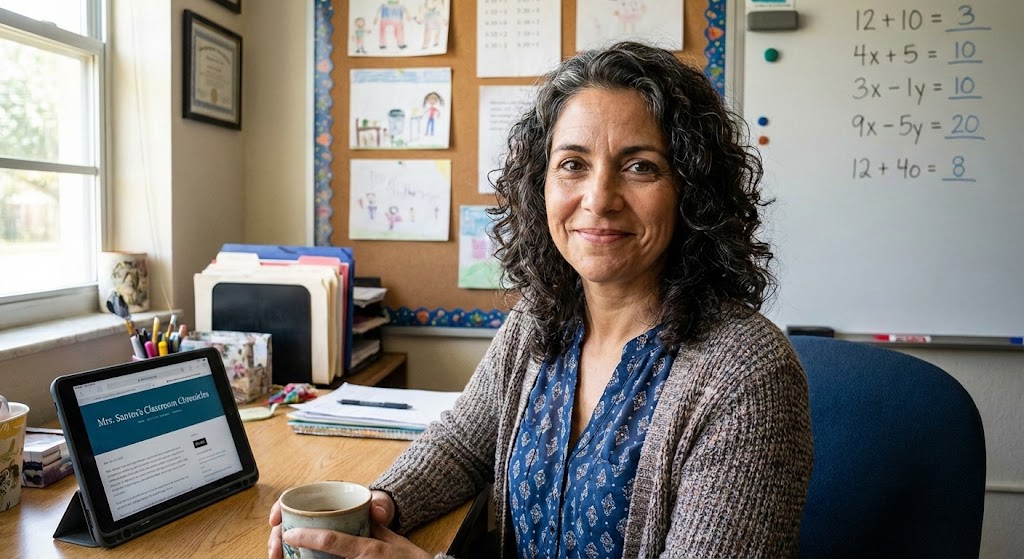
Maria Santos
Maria has been teaching 4th grade in Tampa, Florida for 22 years. Known as "the math whisperer" among her colleagues, she writes about the real challenges and victories of teaching in Florida's public schools.
When she's not grading papers or creating lesson plans, you can find Maria at her local teacher supply store (with coupons in hand) or sharing teaching tips over cafecito with her teacher friends.
View Full Profile →Related Articles
What I Wish I Knew About FAST Testing (Before I Learned the Hard Way)
Florida teacher tip: Let me paint you a picture. It's March 2019, my first year with FAST testing, a...
When Your Classroom Feels Like the Surface of Venus: Surviving Florida's Heat Without Losing Your Mind
Florida teacher tip: It was 8:47 AM on a Tuesday in September when I realized my classroom thermomet...
Ready to Improve Your FAST Scores?
Upload your class data and get personalized IXL success plans in seconds.
Try It Free