DIY Classroom Solutions That Don't Look Like You Made Them in Your Garage
Last week, my principal walked into my classroom and asked where I got my "beautiful organizational system." I almost choked on my cafeteria coffee. Beautiful? Mija, that whole setup cost me twelve dollars and a Saturday afternoon at Dollar Tree.
But here's the thing. Just because we're working with teacher budgets doesn't mean our classrooms have to look like craft store explosions. After 22 years of making something out of nothing, I've learned that the secret isn't spending more money. It's knowing which corners to cut and which ones matter.
Start With What Actually Works
I used to get so caught up in making things look Pinterest-perfect that I forgot the most important question: does it actually help my kids learn?
Take my math manipulative storage. For years, I had these gorgeous labeled jars that looked amazing but were impossible for my students to open. Ay, dios mio, I was so focused on pretty that I created more problems than I solved.
Now? I use clear shoe boxes from the dollar store with simple labels. They stack perfectly, kids can see what's inside, and they're practically indestructible. When little Diego accidentally knocked one over last month, nothing broke and cleanup took thirty seconds.
The lesson here: function first, then make it look good.
The Magic of Spray Paint and Contact Paper
These two items are your best friends when you're trying to make dollar store finds look expensive.
I discovered this by accident when I was trying to create a classroom library system on basically no budget. I bought plastic bins in whatever colors were cheapest, then spray painted them all the same neutral color. Added some simple vinyl labels (you can get sheets at the dollar store), and suddenly I had a cohesive system that looked intentional.
Same trick works for mismatched furniture. That random collection of student chairs you inherited? Pick one color and go to town. I painted all my chairs a soft gray two summers ago, and parents still comment on how "modern" my classroom looks.
Contact paper is equally magical. I've used it to create fake wood grain on cheap plastic drawers, turn cardboard boxes into sleek storage solutions, and even make my old filing cabinet look like expensive furniture.
Smart Shopping: Where to Splurge and Where to Save
After two decades of classroom setup, I've figured out what's worth investing in and what you can absolutely fake.
Save money on: containers, basic furniture, decorative elements, organizational bins
Spend a little more on: anything kids will handle constantly, chairs (your back will thank you), and lighting
I learned this the hard way when I bought the cheapest pencil sharpener I could find. It broke within a month, and I ended up buying three more before finally investing in a decent one. Sometimes cheap really is expensive.
But those cute storage baskets everyone raves about? The dollar store versions work just as well once you give them a little makeover.
The Power of Uniform Systems
One of the biggest differences between DIY that looks homemade and DIY that looks professional is consistency.
Pick a color scheme and stick to it. I use white, gray, and one accent color throughout my entire classroom. It doesn't matter if my bins came from five different stores or if my labels were made on three different machines. Because everything follows the same color story, it all looks intentional.
Same goes for fonts and label styles. I spent one afternoon creating templates for all my classroom labels, and now everything I make looks like it came from the same designer.
Technology Solutions That Don't Break the Bank
Speaking of systems that work, let me tell you about streamlining data organization. When our FAST scores came back last month, I was dreading the hours I'd normally spend trying to figure out which IXL skills to assign each student. Then my teammate Rosa showed me FastIXL, which converts those scores into specific skill recommendations in about two minutes. Game changer.
But you don't need fancy tools for everything. Some of my best organizational systems are just Google Sheets with pretty formatting and clear categories.
Quick Wins That Make a Big Impact
Sometimes the smallest changes create the biggest visual impact. Here are my go-to tricks:
Upgrade your labels. Ditch the handwritten masking tape for clean, printed labels. Even if you're labeling dollar store containers, good labels make everything look more expensive.
Add plants. Real or fake, greenery makes any space feel more welcoming. I have a collection of dollar store succulents that have fooled everyone, including the school photographer.
Control your cords. Nothing says "DIY disaster" like a tangle of charging cables. Spend five dollars on cord organizers and suddenly your tech station looks professional.
Create height variation. Use books, boxes, or risers to create different levels in your displays. Flat surfaces look boring, but varied heights look intentional and designed.
The Reality Check We All Need
Here's what I wish someone had told me in my first year: your classroom doesn't need to look like a magazine spread. It needs to work for your students and your teaching style.
I've seen gorgeous classrooms where teachers spent their entire summer and half their salary creating Instagram-worthy spaces. But if you're stressed about kids touching your displays or if you can't find anything because it's all hidden behind pretty labels, you've missed the point.
Our job is to create spaces where learning happens, not where photographers want to take pictures.
Making It Sustainable
The best DIY solutions are ones you can maintain without losing your mind. Before I commit to any organizational system or decorative element, I ask myself: will I be able to keep this up in February when I'm running on fumes and cafeteria coffee?
If the answer is no, I find a simpler solution.
This is why I love systems that students can help maintain. My library organization works because kids can easily put books back where they belong. My supply station stays neat because everything has an obvious home.
Your Turn to Create Magic
Remember, we're not trying to compete with teachers who have unlimited budgets or schools that provide everything. We're working with what we have and making it beautiful, functional, and sustainable.
Start small. Pick one area of your classroom that's driving you crazy and apply these principles. Function first, then make it pretty. Consistency over perfection. Systems that work in real life, not just on day one.
And don't forget to take pictures when you're done. Not for social media, but for yourself. Sometimes we need reminders of what we can create with a little creativity and a lot of heart.
What DIY solution has been a game changer in your classroom? I'm always looking for new ideas to steal, I mean, adapt for my space.
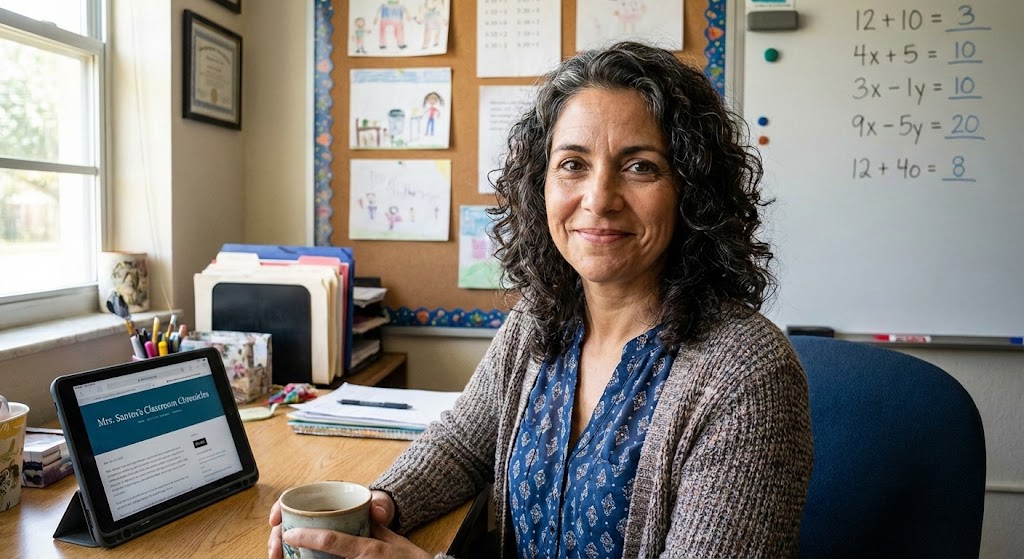
Maria Santos
Maria has been teaching 4th grade in Tampa, Florida for 22 years. Known as "the math whisperer" among her colleagues, she writes about the real challenges and victories of teaching in Florida's public schools.
When she's not grading papers or creating lesson plans, you can find Maria at her local teacher supply store (with coupons in hand) or sharing teaching tips over cafecito with her teacher friends.
View Full Profile →Related Articles
How I Furnished My Classroom for Free (And You Can Too!)
Budget-friendly teaching tip: Picture this: August 2002, my second year teaching. I walked into my n...
My $20 Math Manipulative Haul That Changed Everything
Budget-friendly teaching tip: Last month, I watched my colleague Jennifer spend $150 on a set of fra...
Ready to Improve Your FAST Scores?
Upload your class data and get personalized IXL success plans in seconds.
Try It Free