New Year Resolutions That Actually Work for Teachers (Hint: Forget the Gym Membership)
Last January, I made a resolution to wake up at 5 AM every day to work out before school. By February 3rd, I was hitting snooze until 6:30 and grabbing a Café Bustelo on the way to work. Sound familiar?
Here's the thing about teacher resolutions. We set these grand goals like we're not already juggling 30 different personalities, state standards, and parent emails that somehow always arrive at 10 PM. We need resolutions that work with our crazy lives, not against them.
After two decades of failed January promises (and a few that actually-works-and-wont-keep-you-up-all-night) stuck), I've figured out what works for us educators. These aren't the resolutions you'll see in magazines. They're the ones that survive February.
Start Stupidly Small
The biggest mistake I made early in my career was thinking big changes required big actions. I'd resolve to completely overhaul my classroom management system or redesign every bulletin board.
Now I know better. The changes that stick are the tiny ones.
This year, instead of "I'm going to transform my reading corner," try "I'm going to move one book display each week." Instead of "I'm going to call five parents every day," start with "I'm going to make one positive parent contact each Friday."
My friend Carmen decided to add just one brain break per day. That's it. No complete schedule overhaul, no fancy new curriculum. One extra brain break. By March, her kids were more focused and she felt more successful. Small wins, pero they add up.
Pick Resolutions That Make Your Job Easier
This is where we get it backwards. We think resolutions should be about adding more to our plates. But teachers, we're already carrying enough.
The best teacher resolutions are the ones that simplify your life.
Last year, I resolved to prep one extra week ahead in math. Just one week. It meant spending two Sunday afternoons in January getting ahead, but by February, I wasn't scrambling every weekend. When Marcus had a baseball tournament or Daniela called from college, I could actually be present.
Here are some resolutions that make life easier, not harder:
Set up three morning routines that run themselves. Pick your biggest morning chaos moments and create systems. Maybe it's having kids check their own homework using an answer key, or setting up a morning journal prompt that's already on the board when they walk in.
Choose one thing to stop doing. Seriously. What are you doing that doesn't really help your kids learn? Maybe it's those elaborate bulletin boards that take hours but the kids ignore after day two. Or grading every single worksheet when you could just spot-check.
Create one "emergency" plan. We all have those days when the lesson plan falls apart or you wake up with a scratchy throat. Having a go-to activity ready saves your sanity and keeps learning happening.
Make It About Your Students, Not You
The resolutions that stick are the ones connected to why we became teachers in the first place. When I focus on how a change will help my kids, I'm way more likely to follow through.
Instead of "I want to be more organized" (which feels like homework), try "I want my students to find materials easily so they can focus on learning." Same organizational goal, different motivation.
This year, I'm resolving to learn one new thing about each of my struggling readers. Not for data collection or parent conferences, but because I know that when I understand what makes a kid tick, I can reach them better. It's not about me being a better teacher. It's about them feeling seen.
Build in the Florida Factor
Let's be real about where we teach. Our resolutions need to account for hurricane days, FAST testing stress, and the fact that our kids are going to be bouncing off the walls every time the weather drops below 70 degrees.
Don't make resolutions that fall apart the first time we have a two-hour delay or lose three days to testing. Build flexibility into your goals.
If your resolution involves after-school time, have a backup plan for when you're stuck in carline for an extra 20 minutes. If it requires weekend prep, remember that sometimes hurricanes happen and you'll be focused on securing your windows, not laminating worksheets.
The One-Month Rule
Here's my secret weapon: I only commit to resolutions for one month at a time.
In January, I pick one small change and commit to it for 31 days. That's it. No year-long pressure, no guilt if it doesn't become a lifelong habit. Just one month.
If February 1st rolls around and I want to keep going, great. If not, I pick something new. This takes the pressure off and makes it feel manageable.
Last year, my January resolution was to end each day by writing down three things that went well. Some months I kept it up, others I didn't. But those months when I did it consistently made such a difference in my mindset that I keep coming back to it.
Resolutions That Actually Work
Based on what I've seen work for me and my teacher friends, here are some resolutions worth trying:
The Friday Five-Minute Pickup. Spend five minutes every Friday afternoon prepping one thing for Monday. Just one thing. It makes Monday morning feel possible.
The Compliment Challenge. Give one specific compliment to one student each day. Not "good job" but "I noticed how you helped Sofia with her math problem." Watch your classroom culture shift.
The Sunday Check-In. Spend ten minutes each Sunday looking at the week ahead. Not planning, just looking. It prevents those "oh no, it's picture day and I forgot" moments.
The Energy Audit. Once a week, notice what activities drain your energy and which ones fill you up. Start doing more of the good ones and less of the draining ones.
Make It Stick
The difference between resolutions that work and ones that don't isn't willpower. It's systems.
If you want to call parents more, don't rely on remembering. Put it in your lesson plan template. If you want to drink more water, keep a bottle on your desk and refill it during lunch.
Connect your resolution to something you already do. I wanted to incorporate more movement, so I attached it to our daily math warm-up. Now we do jumping jacks while skip counting, and I don't have to remember a separate time for brain breaks.
You've Got This
Listen, we're not going to become completely different teachers overnight. And honestly, we don't need to. Most of us are already doing amazing work with kids who need us.
But small changes? Changes that make our days a little easier or help us connect with our students a little better? Those are worth trying.
Pick one tiny thing. Give it a month. See what happens.
And remember, if you're reading this blog post instead of grading papers right now, you're already showing that you care about growing as an educator. That matters more than any resolution.
What small change are you going to try this month? Whatever it is, I'm cheering you on from Tampa. We're all in this together, and we're doing better than we think.
Maria Santos
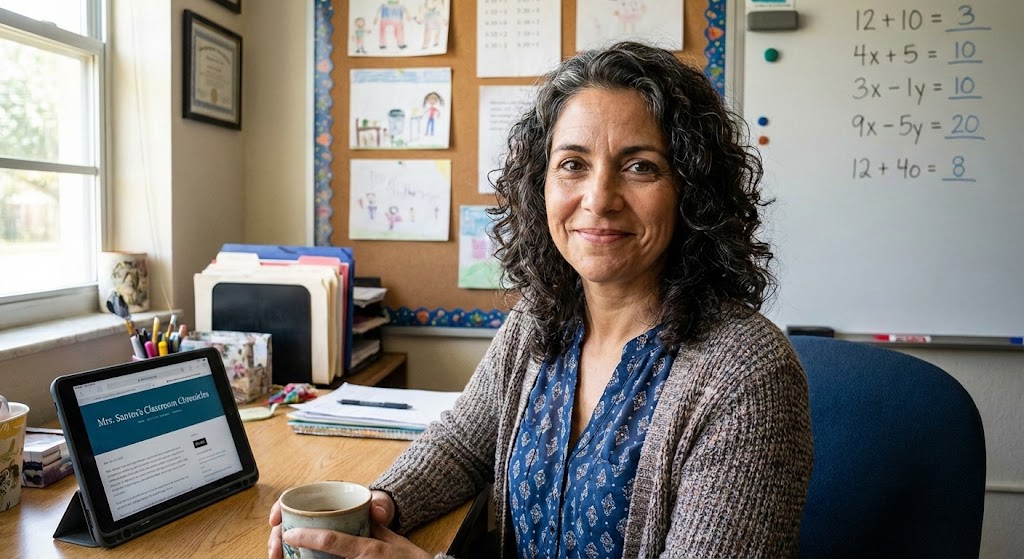
Maria has been teaching 4th grade in Tampa, Florida for 22 years. Known as "the math whisperer" among her colleagues, she writes about the real challenges and victories of teaching in Florida's public schools.
When she's not grading papers or creating lesson plans, you can find Maria at her local teacher supply store (with coupons in hand) or sharing teaching tips over cafecito with her teacher friends.
View Full Profile →Related Articles
The Veteran Teacher Slump is Real (And How I'm Climbing Out of Mine)
Teacher advice: Last Tuesday, I caught myself standing in front of my whiteboard, marker in hand, co...
Finding Your Teacher Tribe: Why You Need Friends Who Get the Crazy
Teacher advice: Last week, my friend Jessica (who works in marketing) asked me why I seemed so stres...
Ready to Improve Your FAST Scores?
Upload your class data and get personalized IXL success plans in seconds.
Try It Free