The Boundary Tester: What to Do When One Student Challenges Every Single Rule
Last Tuesday, I watched Miguel (not his real name) test every single boundary I had set in my classroom. He arrived five minutes late, slammed his backpack down, interrupted my morning message three times, got up without permission twice, and it wasn't even 9 AM yet.
Sound familiar?
We all have that one student who seems determined to find every crack in our classroom management system. The boundary tester. The rule challenger. The kid who makes us question if we're cut out for this job.
After 22 years in the classroom, I've learned that these students aren't trying to make our lives miserable (though it sure feels that way sometimes). They're usually testing boundaries for reasons that have nothing to do with us.
Why Students Test Boundaries
Before I figured this out, I used to take boundary testing personally. Big mistake.
Most boundary testers fall into a few categories. Some have chaotic home lives where rules change daily, so they're checking if our rules are real. Others have learned that acting out gets them attention, even if it's negative attention. Some are dealing with trauma and feel safer when they know exactly where the limits are.
Miguel, it turned out, had moved three times in two years. Poor kid was used to adults who said one thing and did another.
My Early Mistakes (Learn from My Pain)
When I was a new teacher, I handled boundary testers all wrong. I'd get frustrated, raise my voice, and engage in power struggles that nobody won.
I remember Anthony from my third year of teaching. Every time he tested a rule, I'd create a new consequence on the spot. "Fine, Anthony, now you owe me two recesses!" By October, that kid owed me approximately seventeen recesses and had lost every privilege known to fourth grade.
It was exhausting for both of us.
The worst part? My inconsistent responses were actually encouraging him to test more boundaries. He never knew what would happen, so he kept pushing to find out.
What Actually Works
Here's what I've learned works with persistent boundary testers, and trust me, this took years to figure out.
Stay Calm (Easier Said Than Done)
I know, I know. When Sophia asks to use the bathroom for the fourth time in an hour, staying calm feels impossible. But our reaction is everything.
I started using what I call my "teacher voice GPS." You know how GPS systems never get flustered when you miss a turn? They just calmly redirect. "Recalculating route." That's the energy we need.
When Miguel interrupted my lesson again, I simply said, "Miguel, that's interrupting. Please raise your hand." No drama, no lecture, just a calm redirect.
Be Boringly Consistent
This is the game changer, mi amor. Boundary testers need to know that Rule A always leads to Consequence B. Always.
I created what I call my "consequence flowchart" and stuck to it religiously. First interruption gets a reminder. Second gets a warning. Third gets a two-minute break at the calm-down station.
Every single time. Even when I was tired. Even when I had a headache. Even when the principal was observing.
Miguel tested this system for three solid weeks. But when he realized that interrupting always led to the same consequence, the testing behavior started to fade.
Give Them Appropriate Power
Here's something I wish someone had told me earlier: boundary testers often just want some control over their environment.
Instead of fighting this need, I started channeling it. Miguel became my "supplies manager." Sophia got to choose which math warm-up we did each morning. Anthony (from my disaster third year) would have thrived as my "technology helper" if I'd been smart enough to try it.
When students have appropriate ways to exercise control, they're less likely to seek inappropriate ways.
The Long Game Strategy
Some boundary testers need more intensive support. Here's my approach for the really persistent cases.
Build the Relationship First
I started eating lunch with Miguel once a week. Not to lecture him, just to connect. We talked about his old schools, his favorite video games, his little sister.
Those ten-minute conversations did more for his behavior than any consequence chart ever could.
Involve Them in Problem Solving
After building some trust, I had an honest conversation with Miguel. "I've noticed you're having trouble following our classroom rules. What's going on?"
Turns out, he was used to teachers who didn't really mean what they said. In his previous school, kids could get away with almost anything if they were persistent enough.
We worked together to identify his triggers and come up with strategies. He suggested using a hand signal when he was feeling overwhelmed and needed a break. Brilliant kid.
Celebrate Small Wins
When Miguel made it through an entire morning without testing boundaries, I made sure to acknowledge it privately. "I noticed you raised your hand every time today. That really helped our discussion flow smoothly."
Don't underestimate the power of specific, positive feedback with these kids.
When Nothing Seems to Work
Some days, despite our best efforts, boundary testing continues. On those days, I remind myself that consistency is a long-term investment.
I also reach out for support. Sometimes the guidance counselor has insights I'm missing. Sometimes the student needs services I can't provide. Sometimes I just need to vent to my colleague Yolanda about how challenging the day was.
There's no shame in asking for help. We're teachers, not miracle workers.
The Breakthrough Moment
With Miguel, the breakthrough came in November. He arrived late (again), but instead of slamming his backpack down, he quietly took his seat and whispered, "Sorry, Mrs. Santos."
It was such a small moment, but I almost cried right there.
By December, Miguel was one of my most helpful students. He still had challenging days, but he'd learned that our classroom was a safe place with predictable expectations.
Remember This
Boundary testers aren't broken kids who need to be fixed. They're usually kids who need to feel safe and understood.
Our job isn't to win power struggles or prove we're in charge. Our job is to create an environment where all students can learn and grow, even the ones who challenge us daily.
Yes, it's exhausting. Yes, there are days when you want to hide in the supply closet. But these kids often need us the most, and when we get it right, the transformation is beautiful.
Stay consistent, stay calm, and remember that every boundary they test is an opportunity to show them that you're a safe, reliable adult in their world.
You've got this, maestra. We all do.
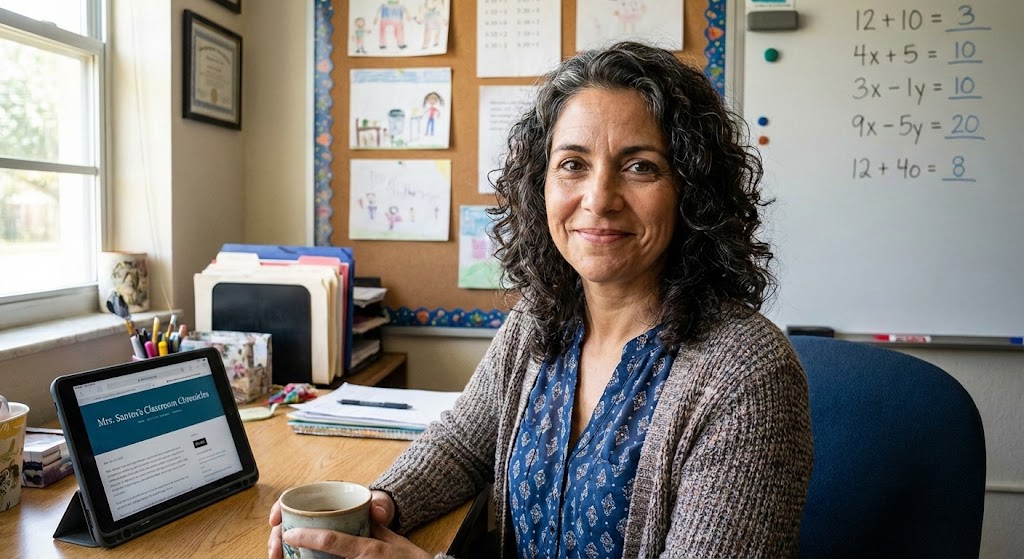
Maria Santos
Maria has been teaching 4th grade in Tampa, Florida for 22 years. Known as "the math whisperer" among her colleagues, she writes about the real challenges and victories of teaching in Florida's public schools.
When she's not grading papers or creating lesson plans, you can find Maria at her local teacher supply store (with coupons in hand) or sharing teaching tips over cafecito with her teacher friends.
View Full Profile →Related Articles
When Everyone's Brain is Already at the Beach (Including Yours)
Classroom management tip: Last Tuesday, I caught myself staring out the window during math, watching...
When May Hits and Everyone (Including You) Has Checked Out
Classroom management tip: Last Tuesday, I walked into my classroom to find three kids sprawled on th...
Ready to Improve Your FAST Scores?
Upload your class data and get personalized IXL success plans in seconds.
Try It Free