When Teaching Feels Like Swimming Upstream: Finding Light in the Dark Days
Last Tuesday, I sat in my car after school and just cried. Not the pretty, single-tear kind of crying you see in movies. The ugly, mascara-running, why-did-I-choose-this-profession kind of sobbing.
It had been one of those days. You know the ones. Three behavior incidents before lunch, a parent email questioning my competence, and news that our already-thin supply budget got cut again. Then Marcus texted asking for money for his senior pictures while I'm literally rationing copy paper.
Sound familiar?
The Gratitude Guilt is Real
Here's what nobody talks about: when teaching gets hard, really hard, we get bombarded with advice about "finding gratitude" and "focusing on the positives." And honestly? Sometimes that makes me want to throw something.
Don't get me wrong. I'm not anti-gratitude. But when you're drowning, telling someone to appreciate the water doesn't help much.
I learned this lesson the hard way during my seventh year teaching. I was struggling with a particularly challenging class, dealing with budget cuts, and going through my own family crisis. Every teacher blog I read kept pushing this toxic positivity about how we should just be grateful for the "privilege" of teaching.
Mija, let me tell you something: it's okay to acknowledge that this job is brutally hard sometimes.
What Gratitude Actually Looks Like in the Trenches
Real gratitude isn't about pretending everything is sunshine and rainbows. It's about finding tiny sparks of light in genuinely difficult circumstances.
After my car breakdown last Tuesday, I went home and complained to Carlos for a solid twenty minutes. He listened (bless that man) and then asked, "But what made you smile today?"
I almost snapped at him. But then I remembered Jayden.
Jayden has been struggling with multiplication all year. I mean really struggling. The kind of struggling that makes you question if you're reaching him at all. But Tuesday, during that nightmare day, he finally got it. His face lit up like Christmas morning when he solved 7 x 8 without counting on his fingers.
That's gratitude. Not the Instagram-worthy kind, but the real, gritty, this-is-why-I-do-this kind.
Small Moments, Big Impact
Here's what I've learned about finding light in dark teaching days: it's not about the grand gestures or perfect lesson plans. It's about collecting small moments like precious coins.
Last month, Sofia brought me a drawing of us reading together during small group time. It's crooked and my hair looks like a brown tornado, but it's taped to my computer monitor because it reminds me that I matter to her.
Two weeks ago, David's mom stopped me in the pickup line just to say that he talks about our classroom discussions at dinner every night. She said he's never been excited about school before this year.
Yesterday, Emma asked if she could stay in during recess to organize our classroom library because she "wants to help other kids find good books like I did."
These aren't earth-shattering moments. They won't make the local news or win any awards. But they're real, and they're ours.
The Permission to Feel It All
Can we talk honestly for a minute? This job is incredibly difficult right now. We're dealing with learning gaps from the pandemic, behavioral challenges that seem bigger than ever, and political pressure that makes us feel like punching bags.
Our students are struggling with anxiety, family stress, and social issues that would challenge trained therapists. Yet we're expected to be teachers, counselors, social workers, and miracle workers all rolled into one, usually with outdated textbooks and our own money.
It's okay to feel overwhelmed. It's okay to have days when gratitude feels impossible. It's okay to question whether you're making a difference.
Feeling frustrated doesn't make you ungrateful. It makes you human.
Building Your Own Gratitude Practice (That Actually Works)
Forget the fancy gratitude journals and morning affirmations. Here's what actually works when you're in the trenches:
The End-of-Day Three: Before you leave school, think of three specific things. Not generic "I'm grateful for my students" stuff. Specific moments. Like how Manuel helped clean up without being asked, or how quiet Aisha was during independent reading, completely lost in her book.
The Colleague Text: Find one teacher friend who gets it. Not the perpetually positive one who makes you feel guilty for struggling, but the real one who also has hard days. Text each other one good moment from your day. Some days it might be "nobody threw up today." That counts.
The Evidence Collection: Keep a folder (digital or physical) of student work that shows growth, parent thank-you notes, or photos of classroom moments that made you smile. On rough days, look through it. I call mine my "Why I Teach" folder, and it's saved my sanity more times than I can count.
When Gratitude Isn't Enough
Sometimes, collecting grateful moments isn't enough to fix what's broken. And that's important to acknowledge too.
If you're consistently dreading work, losing sleep over school stress, or feeling like you're failing more than succeeding, gratitude alone won't solve those problems. Sometimes we need to advocate for better working conditions, seek support for challenging students, or even consider whether this is still the right fit for us.
There's no shame in recognizing when the system is broken, even while we're grateful for the relationships we build within it.
Finding Your Why Again
After 22 years in this profession, I've learned that gratitude isn't about ignoring the hard parts. It's about remembering why we started this journey in the first place, even when everything feels upside down.
We didn't become teachers for the pay or the prestige (ay, Dios mío, definitely not for those things). We became teachers because we believed we could make a difference in young lives. And you know what? We do. Every single day, in ways both big and small.
Yes, the system is flawed. Yes, we're asked to do too much with too little. Yes, some days feel impossible.
But we're still here. We're still showing up. We're still believing in our students when they can't believe in themselves.
That's not just gratitude. That's heroism disguised as an ordinary Tuesday.
So the next time someone tells you to "just be grateful," remember this: real gratitude acknowledges both the beauty and the brokenness. It doesn't require you to pretend everything is perfect. It just asks you to notice the light, even when it's barely a flicker.
Because sometimes, that flicker is enough to keep us going until tomorrow.
And tomorrow, there might be another Jayden moment waiting for us.
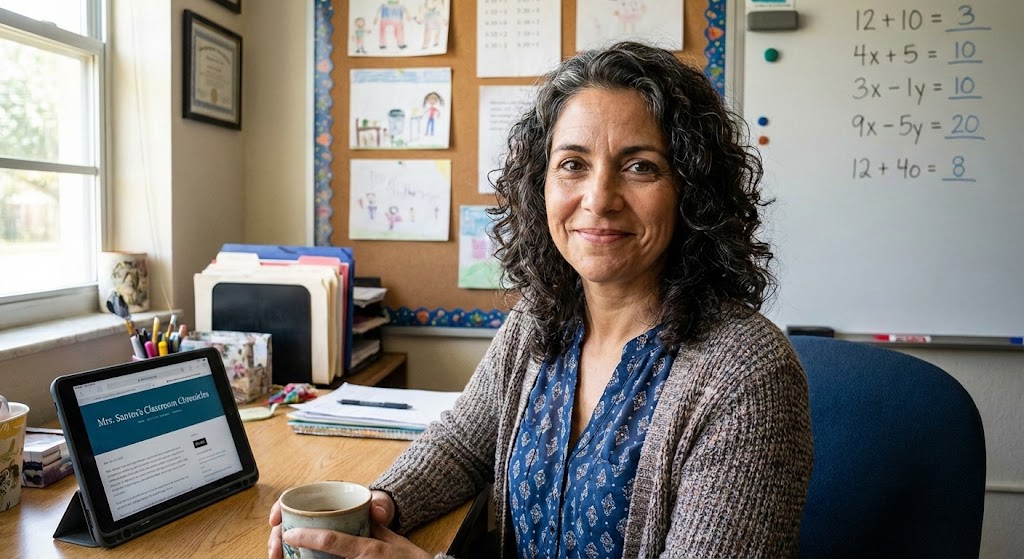
Maria Santos
Maria has been teaching 4th grade in Tampa, Florida for 22 years. Known as "the math whisperer" among her colleagues, she writes about the real challenges and victories of teaching in Florida's public schools.
When she's not grading papers or creating lesson plans, you can find Maria at her local teacher supply store (with coupons in hand) or sharing teaching tips over cafecito with her teacher friends.
View Full Profile →Related Articles
New Year Resolutions That Actually Work for Teachers
Teacher advice: Last January, I wrote down "be more organized" on my resolution list. By February, m...
Finding Your Teacher Tribe: Why We Need Friends Who Understand the Struggle
Teacher advice: Last Tuesday, I was venting to my neighbor about how exhausted I was after parent co...
Ready to Improve Your FAST Scores?
Upload your class data and get personalized IXL success plans in seconds.
Try It Free