Why My Students Used to Hide When I Said "Word Problem" (And How I Fixed It)
Last Tuesday, I watched little Sofia physically duck behind her desk when I announced we were doing word problems. Ay, dios mio, it broke my heart. But honestly? I couldn't blame her.
For years, I was making word problems way harder than they needed to be. I'd throw a paragraph of text at my fourth graders and expect them to magically extract the math. No wonder they were terrified.
After 22 years of teaching, I've learned that word problems don't have to be the enemy. They can actually become our students' favorite part of math class. Yes, really.
The Real Problem with Word Problems
Here's what I figured out the hard way: kids aren't afraid of the math in word problems. They're afraid of the words.
When Marcus (not my son, my student Marcus) sees a paragraph full of text, his brain shuts down before he even gets to the numbers. Sound familiar?
We're asking our students to be reading detectives AND math wizards at the same time. That's like asking me to teach a lesson while Carlos explains electrical wiring to me. My brain just can't handle both at once.
Start with the Story, Not the Math
This changed everything for me. Instead of diving straight into problem solving, I spend time making sure kids understand what's actually happening in the story.
I'll read a problem like this: "Maria has 24 stickers. She gives 8 stickers to her sister and 6 stickers to her brother. How many stickers does Maria have left?"
Before we touch any numbers, we talk about the story. Who is Maria? Why is she giving away stickers? Is she being nice or did her mom make her share? (The kids always have opinions about this one.)
Then I ask them to close their eyes and picture what's happening. "Can you see Maria with her stickers? What does she look like? What kind of stickers are they?"
Suddenly, we're not doing a math problem anymore. We're following Maria's sticker adventure.
The Magic of Acting It Out
Remember when we were kids and everything was more fun when we could move around? Our students are the same way.
I keep a bin of random objects for acting out word problems. Counting bears, play money, even pencils work. When we get to Maria's sticker problem, I hand out 24 small squares of paper to represent stickers.
The kids physically give away 8 squares, then 6 more squares. They can see exactly what's happening. The abstract becomes concrete.
Last month, we had a problem about sharing pizza slices. I brought in paper plates and had the kids tear up construction paper "pizza." They were so busy having fun, they forgot they were doing math.
Break It Down Like You're Teaching a Recipe
I learned this trick from my abuela's cooking lessons. She never gave me the whole recipe at once. First, we'd gather ingredients. Then we'd prep. Then we'd cook.
Word problems work the same way.
Step 1: What do we know? (Find the given information) Step 2: What do we need to find out? (Identify the question) Step 3: What's our plan? (Choose the operation) Step 4: Let's solve it (Do the math) Step 5: Does our answer make sense? (Check our work)
I have these steps posted on my wall, and we say them together like a chant. The kids love the routine, and it gives them a roadmap when they feel lost.
Make the Problems About Them
Here's something I wish I'd learned earlier: kids care way more about problems when they star in them.
Instead of reading about random people, I create problems about my students. "If Jayden has 36 Pokemon cards and he trades 12 to Aisha, how many cards does Jayden have left?"
Suddenly, Jayden is sitting up straighter and Aisha is paying attention too. They want to know what happens in their story.
I also let them suggest scenarios. "What if we were planning a class party and needed to figure out how much pizza to order?" Now we're solving a real problem they actually care about.
The Power of Drawing
Not every kid thinks in words or numbers. Some of my students are visual learners who need to see the problem to understand it.
I teach them to draw simple pictures for word problems. Stick figures are perfect. Circles for objects work great. The art doesn't have to be pretty, it just has to make sense to them.
When Destiny draws 24 circles for stickers and then crosses out 8, then crosses out 6 more, she can count what's left. She's solving the same problem as the kid who writes 24 - 8 - 6 = 10, just in her own way.
Create a Safe Space for Mistakes
This might be the most important part. Our kids need to know it's okay to mess up.
I tell them about my early teaching days when I got so nervous during observations that I'd forget how to do basic math in front of the principal. We all make mistakes, pero that's how we learn.
When a student gets stuck, I don't give them the answer. Instead, I ask questions: "What part makes sense to you?" "What part is confusing?" "What would happen if we tried this?"
Sometimes I'll intentionally make a mistake and let them catch it. They love being the teacher for a minute.
The Confidence Game
Here's what I've noticed: once kids stop being afraid of word problems, they actually start enjoying them. It's like watching someone discover they're good at something they thought they hated.
Sofia, the one who used to hide behind her desk? Last week she raised her hand and said, "Mrs. Santos, can we do another word problem?" I almost fell over.
The secret isn't making word problems easier. It's making them less scary. When kids feel safe to try, to make mistakes, and to think out loud, amazing things happen.
Your Turn
Try one of these strategies tomorrow. Pick the one that feels most natural to you. Maybe start by acting out a simple problem with classroom supplies, or create a word problem starring your students.
Remember, we're not just teaching math. We're teaching our kids that they can tackle challenging problems and figure things out. That's a skill they'll use way beyond fourth grade.
What word problem strategies work in your classroom? I'm always looking for new ideas to try with my kids.
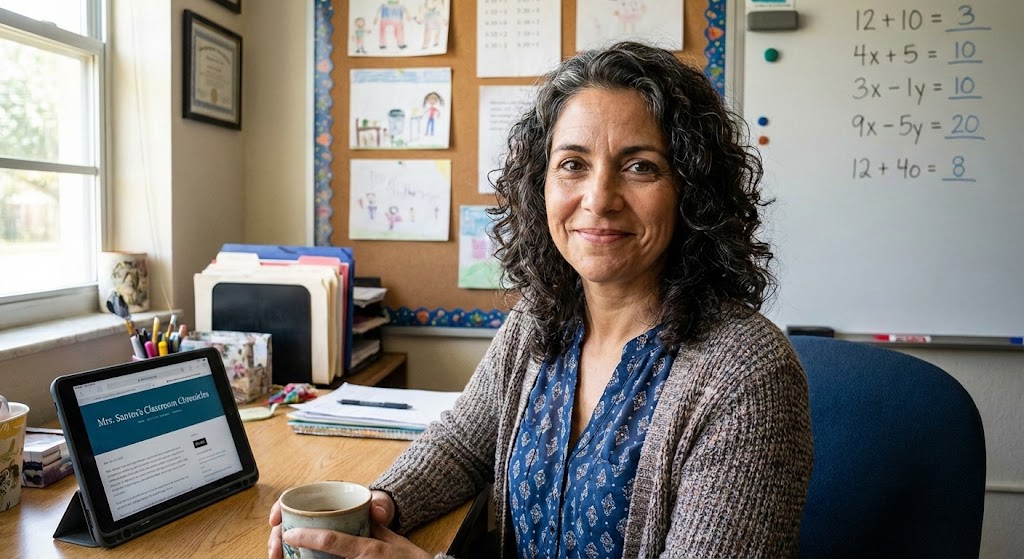
Maria Santos
Maria has been teaching 4th grade in Tampa, Florida for 22 years. Known as "the math whisperer" among her colleagues, she writes about the real challenges and victories of teaching in Florida's public schools.
When she's not grading papers or creating lesson plans, you can find Maria at her local teacher supply store (with coupons in hand) or sharing teaching tips over cafecito with her teacher friends.
View Full Profile →Related Articles
When Mid-Year Data Makes You Want to Hide Under Your Desk (But You Don't Have To)
Math teaching strategy: Last Tuesday, I got my mid-year FAST data back and my first thought was, "Ay...
Making Mid-Year Data Work for You (Instead of Against You)
Math teaching strategy: Last Tuesday, I walked into the copy room and found Jessica practically hype...
Ready to Improve Your FAST Scores?
Upload your class data and get personalized IXL success plans in seconds.
Try It Free